"Better than revenge." These three words seem simple enough, right? I mean, Taylor Swift sings the phrase repeatedly in her song by the same name. Oddly enough, Swift's words can even be related to Shakespeare's play entitled Hamlet.
In Hamlet, the protagonist (Hamlet) must decide whether or not to get revenge against his Uncle/Step-dad/King Claudius, who he believes killed his father in order to become the latter two. Throughout the play, Hamlet considers the advantages and disadvantages of avenging Claudius, finally deciding towards the end of the play to get revenge. However, quickly after getting revenge, Hamlet himself dies. Coincidence? I think not.
There are many things in life which are "better than revenge." Sure, it's tempting to get someone back after they kiss your boyfriend while you are going out or break your heart, but would doing so help your situation? Nope. Rather, it would put you in an even harder place, knowing that you've been unable to resist temptation and hurt someone else along the way. Choosing an option other than revenge - such as trying to help the person learn from their mistake or forgiving the person for what they did - will probably be better for both of you in the long run.
Next time you feel inclined to avenge someone because they have wronged you, remember that there are plenty of things "better than revenge."
Sunday, June 2, 2013

Friday, April 5, 2013
The Power of Satire

If you have ever seen The Colbert Report or read an article from The Onion, you have been exposed to a genre of literature called satire. Satirical pieces generally act as social criticism, poking fun at a social custom or even just society in general. Usually, they are also considered humorous, although sometimes the comedic part is more disturbing and upsetting than funny.
Without the satirical undertone, this piece would be advocating for the wonderful act of cannibalism; the descriptive diction that Swift uses when describing how scrumptious children taste would be taken literally, making the reader lose their appetite for a while. Essentially, satire has the ability to change a piece's essence, purpose, and tone from one end of the spectrum to the other.
Sunday, March 24, 2013
Pleasing Proposal or Pathetic Profession of Passion?
(I would like to start off by saying that if you are of the male gender or just a heartless female, this post is probably not for you.)

 It's another one of those days that every girl dreams of: the day that her Prince Charming gets down on one knee and professes his love for her. Whether it's on camera in front of millions of viewers or in a private and romantic location means nothing; all that matters is the love between the two people who are preparing to pledge their lives to one another.
This past week, we had the opportunity to give our opinions on proposals taken from books written by Jane Austen and Charles Dickens. The first proposal is absurd; the man obviously has no feelings for the woman and only cares about the ways that marriage would benefit him. The second proposal is touching; the man pours his heart out and bluntly tells the woman that he loves her. However, while he expresses his love for her, he employs a few statements that were deemed pitiful by many boys in class because of their cliché nature. But is there really such a thing when it comes to something as romantic and heartfelt as a wedding proposal?
During a proposal, a man should say anything and everything that is on his mind. If he thinks that her eyes sparkle like diamonds, why shouldn't he tell her that? Hearing something like that will just make the moment even more special for the woman.
So boys, don't be afraid of those things that you call "clichés," because they are a lovely way to any girl's heart.
This past week, we had the opportunity to give our opinions on proposals taken from books written by Jane Austen and Charles Dickens. The first proposal is absurd; the man obviously has no feelings for the woman and only cares about the ways that marriage would benefit him. The second proposal is touching; the man pours his heart out and bluntly tells the woman that he loves her. However, while he expresses his love for her, he employs a few statements that were deemed pitiful by many boys in class because of their cliché nature. But is there really such a thing when it comes to something as romantic and heartfelt as a wedding proposal?
During a proposal, a man should say anything and everything that is on his mind. If he thinks that her eyes sparkle like diamonds, why shouldn't he tell her that? Hearing something like that will just make the moment even more special for the woman.
So boys, don't be afraid of those things that you call "clichés," because they are a lovely way to any girl's heart.
Sunday, March 17, 2013
Assumptions Lead to Danger
Assuming - we all do it. However, there is danger in believing something that has not been proven.
 These men aren't the only ones who have ever assumed something. We assume that any medicine on the market is safe. However, how many times have pills been taken off the market because of unforeseen side effects that they have caused? (Many.) And how many times have we walked past the National Enquirer on the end of an aisle at the grocery store, seen some absurd story on the cover, believed it, and then later found out that it is completely false? (Many.) And how many times have accidents happened because people assume that, since they have a green light, they can go without checking for cross traffic? (Many.) Society's problem is that the second we see or hear something, we instantly assume that it must be true or safe or alright to do. Until we decide not to believe something until it has been proven to be true, we will continue to be swept higher and higher into the tornado of naïveté that surrounds us.
In "A Measure of Restraint," Chet Raymo describes a perfect example of how assuming things can lead to very negative outcomes. He explains the story of two men who found a stainless steel cylinder in an abandoned radiation clinic. There was some "seemingly magical material" inside of it, and the men didn't think twice before distributing it to their family and friends. However, they did not know that the "lovely light" was actually emitted because the cesium-137 in the container was decaying. They also did not know that another product made during its decay damaged living cells, leading to the death or serious ailments of those who had been contaminated by the substance.
Sunday, March 10, 2013
Satisfaction
Scott Russell Sanders examines this quality that many have in a passage from "Staying Put: Making a Home in Restless World." The example he uses is that "If we fish out a stream or wear out a field, or if the smoke from a neighbor's chimney begins to crowd the sky, why off we go to a new stream, a fresh field, a clean sky" (Sanders). It is humorous that people would uproot their entire life in order to avoid something that they don't deem perfect.
Rather than spending our lives picking out the problems that people and goods have, we would live happier lives if we just focused on good qualities. Is it really going to kill you if you were given a cheeseburger instead of a hamburger? Unless you are lactose intolerant and do not carry Lactaid pills with you, the answer is no.
Sunday, March 3, 2013
Expecting the Worst

Why don't we ever think that the man is going to help the woman - maybe ask her if she is lost or if he could buy her a cup of coffee? The answer is simple: from the time we are children, we are told not to trust anyone but our family or our babysitters. For our entire lives, we have been taught that we shouldn't talk to strangers because they might hurt us.
In "Black Men and Public Space," Brent Staples depicts the different reactions that he has gotten due to his gender, size, and race. As a big black man, Staples has, on multiple occasions, been thought of as dangerous by strangers. For example, people that he has encountered have "[run] in earnest" (Staples 205) away from him and "[hammered] down the door locks" (Staples 205). He admits that he "often [sees] women who fear the worst from [him]" (Staples 206), but he is "a softy who is scarcely able to take a knife to a raw chicken -- let alone hold one to a person's throat" (Staples 205). You can't feel anything but sympathy for this man who people are assuming is a bad guy.
As a society, we always expect the worst. From test scores to new experiences, we frequently think of the most unfavorable scenario. But what would happen if we let go of our negative expectations and replaced them with positive thoughts? Maybe instead of letting stereotypes occupy our minds, we can actually get to know the people that we have these ridiculous thoughts about. That way, we wouldn't be assuming things about people that we don't know.
(This video from SoulPancake is a great example of people from various backgrounds and of various ages getting to know people who they probably never would have approached. However, as you can see, the people find similarities between themselves and learn new things about their new friends.)
Sunday, February 24, 2013
¡Viva Las Vegas!
Las Vegas: Home to Casinos, Various Forms of Entertainment, and Wedding Chapels. Lots of wedding chapels. At these chapels, you can choose a theme, like Star Trek or Hawaiian; a language for the ceremony, like Japanese or French; or even a drive-thru option, so you don't have to get out of the car! The number of unique and absurd options is endless.
In "Marrying Absurd," Joan Didion describes the process of these weddings, as well as various scenarios from them. She exposes their trivial nature through her ridiculing diction; phrases like "what happens there has no connection with 'real' life" (Didion 102) and "There are nineteen such wedding chapels...each offering better, faster, and, by implication, more sincere services than the next" (Didion 102-103) contribute to her mocking tone. In addition, the examples of couples that have participated in these wedding "ceremonies" help add to her point that most of the people who get married this way are "children who do not know how else to find it, how to make the arrangements, how to do it 'right'" (Didion 103).
Vegas weddings, with their extremely short ceremonies, ridiculous options, and inexpensive costs, are hardly weddings at all. On a couple's wedding day, they are pledging their lives to each other, telling each other that they will stay together "in sickness and in health," and promising their love for eachother "from this day forward until death do us part". However, Las Vegas weddings take the focus off the true meaning and significance of marriage by emphasizing the unimportant elements of the wedding and rushing through the meaningful ones.
Sunday, February 10, 2013
Fish Cheeks? I'll pass
One of the most distinguishable characteristics of a culture is its food. Most cultures have a staple food like rice or pasta that has been eaten at almost every meal for generations. This often makes it tough when a family relocates because they have to choose between assimilating and sacrificing part of their own culture or maintaining their own cuisine in the new place.
 In "Fish Cheeks," Amy Tan describes a Christmas Eve dinner scenario from her teenage years that involves a white boy named Robert (whom she had a crush on) and his family coming to her very Asian household for dinner. In addition to her father's loud belch at the dinner table, Amy's mother serves traditional Asian cuisine rather than the usual ham or turkey dinner that Americans are accustomed to. She finds this very embarrassing and worries that Robert won't like her because of her family and culture.
However, there are numerous things that can be taken away from other cultures. If you think about it, the American lifestyle that most of us have grown up with is really just a combination of a bunch of other cultures. Rather than being ashamed of the way your family acts and what your family eats, take that as an opportunity to teach those around you about your background. And if you're in Robert's shoes, enjoy the learning opportunity that you've been given.
Sunday, February 3, 2013
Disabilities in Today's Society
What is your reaction when you see people who are different from yourself? Have you ever judged them? To be frank, you would be lying if you answered, "No."
What if the person was very small in stature, in a wheelchair, or mentally retarded? Generally, there is a reason for these things, like a birth defect or disease the person has. However, we tend to ignore that and still judge the people in some way. In addition, maybe you would think that they aren't as good as yourself since you don't have any physical issues like they do. However, these are the people who have been through the most in life and are the strongest because of it; often, they have been teased and ridiculed and laughed at and bullied for their entire lives.



In Disability, Nancy Mairs discusses our society's response to people with impairments. In the piece, she highlights one point that really stands out to me. She wrote that when she asked why disabled people are rarely used in advertisements, a local advertiser told her that, "'We don't want to give people the idea that our product is just for the handicapped'" (Mairs 14). When I read that, I instantly loathed the advertiser. To be honest, I really don't think having a disabled person on a box of Cheerios or a billboard for McDonald's would stop people from buying something they like or have any negative effects at all.
You might be thinking, "In what ways would society benefit from people with disabilities being included in advertisements?" Well, the most important thing that would do is provide people who have these disabilities with role models who are in similar situations and have overcome the hardships that their condition has put them through. This would provide these people with a source of strength and give them perseverance to keep fighting through their disability. Also, it would mark an important milestone in our culture. It would be the day that companies stopped letting their desired success trouble them so much and focused on something even more important, which is showing people who are disabled that they care about them.
What if the person was very small in stature, in a wheelchair, or mentally retarded? Generally, there is a reason for these things, like a birth defect or disease the person has. However, we tend to ignore that and still judge the people in some way. In addition, maybe you would think that they aren't as good as yourself since you don't have any physical issues like they do. However, these are the people who have been through the most in life and are the strongest because of it; often, they have been teased and ridiculed and laughed at and bullied for their entire lives.
In Disability, Nancy Mairs discusses our society's response to people with impairments. In the piece, she highlights one point that really stands out to me. She wrote that when she asked why disabled people are rarely used in advertisements, a local advertiser told her that, "'We don't want to give people the idea that our product is just for the handicapped'" (Mairs 14). When I read that, I instantly loathed the advertiser. To be honest, I really don't think having a disabled person on a box of Cheerios or a billboard for McDonald's would stop people from buying something they like or have any negative effects at all.
You might be thinking, "In what ways would society benefit from people with disabilities being included in advertisements?" Well, the most important thing that would do is provide people who have these disabilities with role models who are in similar situations and have overcome the hardships that their condition has put them through. This would provide these people with a source of strength and give them perseverance to keep fighting through their disability. Also, it would mark an important milestone in our culture. It would be the day that companies stopped letting their desired success trouble them so much and focused on something even more important, which is showing people who are disabled that they care about them.
Sunday, December 16, 2012
Used in a Derogatory or Joking Manner?
However, everyone has their own idea of what sort of language is acceptable.
The thing is, African-Americans call each other this frequently, so why is it socially unacceptable for people from other races to call them that? If they found it that offensive, NOBODY would call them that even if they were also from African descent and using it in a joking manner. I don't mean to affront anyone here, however it seems hypocritical to me for whites to be criticized if they were to use a word such as that.
There really is no definite line between joking around and actually trying to offend someone by using that word. So what's the solution? The best thing to do would be for everyone to refrain from using words that most people would find offensive, leaving the world a much friendlier and positive place.
Saturday, December 8, 2012
Unrequited Love
We've seen it before: someone falls in love with someone outside their grasp and it makes that person absolutely miserable when they aren't loved back. From Romeo and Juliet to Gone With the Wind, there have been countless books, movies, plays, and songs dealing with this. But now, we can relate it to Jay Gatsby's situation in The Great Gatsby.


Fitzgerald portrays Gatsby as a character who has been longing to have Daisy, the love of his life, back for years. When Gatsby went off to the war, Daisy decided she could not wait for him to get back so she ended up dating, and eventually marrying, Tom instead. He has longed for her, the part of the American dream that he seemed to be missing, and this longing is even represented in the book by the scene where Gatsby reaches out towards the green light. The feeling of unrequited love wore on Gatsby for 5 years before he finally made a move to see if Daisy would take him back. However, she said she could not leave her husband Tom, leaving Gatsby hopeless.
A lot can be taken away from what happened to Gatsby. Although he did not end up getting Daisy, the persistence he showed by having feelings for her for so long is commendable. It showed that he was not going to give up on his dream until he did his best to try to get her back. Also, the fact that he did whatever he had to do in order to get her attention is laudable. Sure, he didn't attain his wealth in an honorable way, yet that isn't the point; he still did what he had to so he could throw the extravagant parties in hopes of Daisy seeing and deciding to stop by.
While some of Gatsby's actions in the book definitely are not respectable, you have to consider that the feeling of unrequited love can change a person into something that they are not: It can annihilate any confidence you have. It can make you bitter and cynical. It can hurt your feelings more than almost anything. So no matter what you think about Gatsby, one thing is for sure: his commitment to trying to win Daisy back is admirable and more people in real life should be committed to love as much as Gatsby was.

Fitzgerald portrays Gatsby as a character who has been longing to have Daisy, the love of his life, back for years. When Gatsby went off to the war, Daisy decided she could not wait for him to get back so she ended up dating, and eventually marrying, Tom instead. He has longed for her, the part of the American dream that he seemed to be missing, and this longing is even represented in the book by the scene where Gatsby reaches out towards the green light. The feeling of unrequited love wore on Gatsby for 5 years before he finally made a move to see if Daisy would take him back. However, she said she could not leave her husband Tom, leaving Gatsby hopeless.
A lot can be taken away from what happened to Gatsby. Although he did not end up getting Daisy, the persistence he showed by having feelings for her for so long is commendable. It showed that he was not going to give up on his dream until he did his best to try to get her back. Also, the fact that he did whatever he had to do in order to get her attention is laudable. Sure, he didn't attain his wealth in an honorable way, yet that isn't the point; he still did what he had to so he could throw the extravagant parties in hopes of Daisy seeing and deciding to stop by.
While some of Gatsby's actions in the book definitely are not respectable, you have to consider that the feeling of unrequited love can change a person into something that they are not: It can annihilate any confidence you have. It can make you bitter and cynical. It can hurt your feelings more than almost anything. So no matter what you think about Gatsby, one thing is for sure: his commitment to trying to win Daisy back is admirable and more people in real life should be committed to love as much as Gatsby was.
Saturday, December 1, 2012
Right of Interpretation
Many of us have said that we think the critics who wrote these articles about The Great Gatsby are just reading into what Fitzgerald wrote too heavily. While some of the textual evidence could support these viewpoints, in my opinion, the only possible realistic interpretation was the historical one that related Gatsby to a self-made man, but even that might not have been a conscious effort. In reality, however, Fitzgerald could have subconsciously included phrases or scenarios that reveal his opinions of these topics. Because we can't just call up Fitzgerald and ask what his intentions were with this novel, the only thing we can do is believe what we want to believe, as long as there is support for it. It's open to our own interpretation.
No matter what, many things are going to be subjective. How many feet does someone mean when they say something is "long"? Or what is the real definition of "pretty"? Both of these words are abstract; there is not only one "correct" answer to those questions. This is like many things in life. There is no way to define beauty, love, success, or hope since they aren't concrete objects.
Just as the articles about different interpretations of The Great Gatsby show different analysis of the text, these words are up to your own interpretation. No two people are going to interpret text, abstract words, or pretty much everything else in the world in the exact same way, but everyone is entitled to giving their own take on them.
Friday, November 23, 2012
Preserving Innocence or Setting Back A Child's Education?
In general, children tend to be portrayed as angels who are always happy and innocent. But do children fight on the playground? Do they tease one another if they don't own the newest fad? Do they argue over irrelevant things? Of course they do. So are they really that innocent?
Recently, we read "The History Teacher" by Billy Collins for English class. As far as the poem itself goes, it was wonderfully written; however, its topic is extremely controversial. It is about a history teacher who, rather than telling the truth, teaches his young students incorrect information about historical events in order to preserve their "innocence". He tells them that "the Enola Gay dropped one tiny atom on Japan" and "The War of the Roses took place in a garden" so they won't be exposed to the cruelties and casualties associated with actual wars and fighting. But by doing this, is he really helping?

What happened happened. It is what it is. There is no justification for teaching the children false history since it isn't going to change what actually went on.
Sunday, November 18, 2012
Style vs. Rules
Style can be referred to when talking about music, clothes, literature, and almost everything else in the world. Style is a way of expressing yourself and setting yourself apart from others.
When reading poetry by Emily Dickinson, a few unusual techniques stood out quickly in almost all of her pieces that we read. She utilizes dashes, irregular capitalization, and inverted syntax frequently, as well leaves her poems unnamed, which all add to the style and character of her poems. However, at the time that she wrote these pieces, it was unheard of to break the equivalent of writing "rules", or what had become the norm. Nevertheless, these rules didn't keep her from writing the way she thought was best to express her feelings and thoughts.
The fact that she wrote differently from the famous poets of her time is what sets her apart nowadays in the minds of anyone who has studied other pieces from that same time. During Emily's life, only a few of her pieces were published, of which the publishers changed drastically in order to fit the "mold" for proper poetry. This is why she wasn't known for being an outstanding poet until a while after she died, when in 1955 her poems were finally published without being altered. If her poetry had been just like every other poem in the mid-1800s, people today probably wouldn't know about her poetry; they'd miss out on all of the pieces about death and immortality that Dickinson so beautifully wrote.
This shows that if you want to leave a lasting impact on your community, state, country, or even the world, you can't just act like everyone else. Although it may be more comfortable for you to just blend into society and never stand out, you probably won't leave a very strong impact on those around you. What I'm trying to say is that you should dress however you like, voice your opinion even if it's the complete opposite of what everyone else is saying, get involved in things that interest you, and DO NOT be afraid to be different from the "rules" that society makes about how you should look and act.
Do you think that Martin Luther King Jr. and Mahatma Gandhi would have accomplished the profound things they did without strongly asserting their beliefs? Let me make the answer clear: No.
This shows that if you want to leave a lasting impact on your community, state, country, or even the world, you can't just act like everyone else. Although it may be more comfortable for you to just blend into society and never stand out, you probably won't leave a very strong impact on those around you. What I'm trying to say is that you should dress however you like, voice your opinion even if it's the complete opposite of what everyone else is saying, get involved in things that interest you, and DO NOT be afraid to be different from the "rules" that society makes about how you should look and act.
Do you think that Martin Luther King Jr. and Mahatma Gandhi would have accomplished the profound things they did without strongly asserting their beliefs? Let me make the answer clear: No.
Sunday, November 11, 2012
Self Punishment vs. Public Punishment
Punishment can be enforced in countless ways, such as being "grounded", getting yelled at, or even being physically hurt. However, the most terrible punishment of all is merely being upset with yourself.

 In a teenager's life, especially from the city I live in, we are constantly being punished by our parents for things like not getting all A's, receiving a 36 on the ACT, or being first chair in band and/or orchestra. It seems like for many of us, it's turned into a ritual to be yelled at each night because of a bad grade you received in one of your several AP classes; many of us are also grounded for what seems like eternity. However, no matter how disappointed our parents are because of these things, nothing beats how upset we are with ourselves for not being as perfect as society expects us to be. The guilt and sadness that accompany receiving something other than an A+ are profound; we think about how we could have stayed up an extra half hour and maybe learned a few more facts that would have helped us on a test, or not hung out with our significant other for a couple hours just so we could study.
As seen in The Scarlet Letter by Nathaniel Hawthorne, self punishment happened to be more effective than that of the public. As a result of the adultery that she committed, Hester had to wear the scarlet "A" on her chest so everyone that saw her would know that she is the one who did this terrible thing. In addition, she had to stand on the scaffold in front of the whole community for three hours and suffer from the public ridicule that came along with that. Dimmesdale, the man who committed this infidelity with her, however, only had to deal with the guilt that accompanied his actions since the public had no idea that the man who impregnated Hester was him. Although it seems like Hester's public punishment would have a more profound negative effect on her, she somehow coped quited well with it and forgave herself. Dimmesdale, on the other hand, suffered miserably which contributed to his death on the scaffold.

There has to be a point where we are satisfied with ourselves for the things we have done. Sure, we didn't get all A's on our report card, but it is what it is. Being upset with yourself for how things played out doesn't help you at all; it puts you into a hole that is nearly impossible to climb yourself back out of. You have to learn to be okay with the results of giving your best effort, even if they are not ideal, because in the end, that is all that you can do.
Saturday, November 3, 2012
Learning to Embrace One's Mistakes
When you look around a room, it's usually easy to tell who is confident just by the body language he or she has. However, people encounter plenty of situations each day that often can bring down their level of self pride.

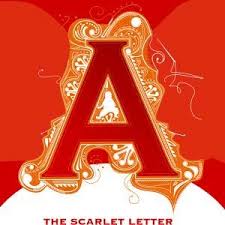 In The Scarlet Letter by Nathaniel Hawthorne, confidence is taken to a whole new level by Hester Prynne. Because she committed adultery and bore an illegitimate child, she is forced to wear a scarlet "A" on her chest so everyone she sees will know what she has done. Although most people would be ashamed of this sign of indecency and try to hide it, Hester proudly wears the A on her dress as she steps into public view after leaving the prison. She knows that there is no point in letting the criticism of the crowd surrounding her bother her and decides to just accept the past for what it is.
I feel as though everyone can learn an important lesson from Hester: Don't let actions of the past bring you down once they can't be changed. Sure, we all regret things like doing so poorly on a test that we were just 1% away from failing (does the Babylon Revisited test ring a bell for anyone?) or liking someone that we end up realizing is a jerk, but at the same time, we cannot let that bring us down for the rest of our lives. If you spend too much time reflecting on what you've done wrong in your life, you won't have time to do anything right. People make mistakes that will haunt them for the rest of their lives, but they can't be taken back once they happen. The only thing you can do is embrace them and learn lessons along the way, as Hester did.

I feel as though everyone can learn an important lesson from Hester: Don't let actions of the past bring you down once they can't be changed. Sure, we all regret things like doing so poorly on a test that we were just 1% away from failing (does the Babylon Revisited test ring a bell for anyone?) or liking someone that we end up realizing is a jerk, but at the same time, we cannot let that bring us down for the rest of our lives. If you spend too much time reflecting on what you've done wrong in your life, you won't have time to do anything right. People make mistakes that will haunt them for the rest of their lives, but they can't be taken back once they happen. The only thing you can do is embrace them and learn lessons along the way, as Hester did.
Friday, October 26, 2012
The Effectiveness of Anna Quindlen's Commencement Address-1999
All graduation ceremonies are comprised of the handing out of diplomas and a commencement address that is usually done by an alumni of the school. The address add a unique opportunity to hear a renowned speaker and force the graduates, as well as the families and friends in attendance, to consider the thoughts they hold in regards to life; however, they are seldomly remembered for long.
In Anna Quindlen's commencement address that she gave at Mount Holyoke College in 1999, she stresses trying to go against the homogenization of society and be your own individual. She implores that each member of the audience leave his or her backpack "full of bricks" behind and follow the "small voice from inside [him or her], that tells [him or her] to go another way". This correlates to the characteristic of transcendentalism that stresses individualism and self-reliance.
 I was assigned Anna Quindlen's commencement address to read and annotate, and I honestly was not a fan of it. When watching a video of her giving the speech, her body language did not come across as very strong since she kept looking down at the words, hence her point did not project as greatly as it could have if she knew how her speech was supposed to go. Also, she included a couple remarks that were supposed to be funny, however the audience and I didn't seem to think they were. In addition, her metaphors could have been much more convincing. Lastly, her closing statement, "Every day feels light as a feather," was simply powerless and did not wrap up her speech very well. While her idea of not letting society's idea of perfection mold you into that type of person is significant, I felt as though her writing did not live up to the standards of the commencement addresses I have had the honor of hearing live, such as Sanjay Gupta's 2012 speech at the University of Michigan graduation this year.
To be honest, maybe in some cases it is a good thing that graduates usually don't recall the commencement addresses for long after they are given. I'm sure the graduating class of 1999 from Mount Holyoke College doesn't treasure her speech because even after listening to it and reading it twice, I did not feel attached to what she was trying to say. In the end, these addresses will only be memorable if: 1) something embarrassing or awkward happens during the speech, or 2) the speech impresses everyone in attendance because it has a combination of compelling, humorous, and sentimental characteristics. If it does the latter, the graduates are much more apt to try to follow the ideas that the speaker presents, making for a commencement speech that actually does its job.
In Anna Quindlen's commencement address that she gave at Mount Holyoke College in 1999, she stresses trying to go against the homogenization of society and be your own individual. She implores that each member of the audience leave his or her backpack "full of bricks" behind and follow the "small voice from inside [him or her], that tells [him or her] to go another way". This correlates to the characteristic of transcendentalism that stresses individualism and self-reliance.
I was assigned Anna Quindlen's commencement address to read and annotate, and I honestly was not a fan of it. When watching a video of her giving the speech, her body language did not come across as very strong since she kept looking down at the words, hence her point did not project as greatly as it could have if she knew how her speech was supposed to go. Also, she included a couple remarks that were supposed to be funny, however the audience and I didn't seem to think they were. In addition, her metaphors could have been much more convincing. Lastly, her closing statement, "Every day feels light as a feather," was simply powerless and did not wrap up her speech very well. While her idea of not letting society's idea of perfection mold you into that type of person is significant, I felt as though her writing did not live up to the standards of the commencement addresses I have had the honor of hearing live, such as Sanjay Gupta's 2012 speech at the University of Michigan graduation this year.To be honest, maybe in some cases it is a good thing that graduates usually don't recall the commencement addresses for long after they are given. I'm sure the graduating class of 1999 from Mount Holyoke College doesn't treasure her speech because even after listening to it and reading it twice, I did not feel attached to what she was trying to say. In the end, these addresses will only be memorable if: 1) something embarrassing or awkward happens during the speech, or 2) the speech impresses everyone in attendance because it has a combination of compelling, humorous, and sentimental characteristics. If it does the latter, the graduates are much more apt to try to follow the ideas that the speaker presents, making for a commencement speech that actually does its job.
Saturday, October 20, 2012
Use of Appeals in Everyday Life
Whether emotional, ethical, or rational, everyone comes into contact with many appeals each day. Commercials, junk mail, billboards, tv and radio shows, and many other types of media use a combination of appeals in order to make more people agree with the opinions of those who pay for them.
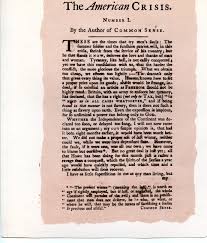
When reading significant historical writings from colonial times, the frequent use of appeals to persuade readers is evident. For example, "The Crisis" by Thomas Paine was written to boost the morale of the soldiers and inspire them to keep fighting against the British. In it, Paine incorporated such ethical appeals as, "...our homes turned into barracks and bawdy-houses for Hessians, and a future race to provide for whose fathers we shall doubt of," in order to remind the soldiers about how terrible it is that the soldiers and British in general are taking over every aspect of their lives.
The most common use of these different appeals currently is related to the upcoming presidential elections. By using these persuasive strategies, both the candidates and their political parties desperately try to gain more voters. For example, in one of his speeches, Mitt Romney said, "Three years later, unemployment is still above 8%, a figure he said his stimulus would keep from happening,". Using this statistic as a rational appeal, he hoped to gain support for him in the election.
 While these appeals certainly do help change the minds of some indecisive voters, they do not necessarily affect those who already have their mind made up. Appeals can only influence people to a certain extent; once that is reached, people have to make their own minds up.
When reading significant historical writings from colonial times, the frequent use of appeals to persuade readers is evident. For example, "The Crisis" by Thomas Paine was written to boost the morale of the soldiers and inspire them to keep fighting against the British. In it, Paine incorporated such ethical appeals as, "...our homes turned into barracks and bawdy-houses for Hessians, and a future race to provide for whose fathers we shall doubt of," in order to remind the soldiers about how terrible it is that the soldiers and British in general are taking over every aspect of their lives.
The most common use of these different appeals currently is related to the upcoming presidential elections. By using these persuasive strategies, both the candidates and their political parties desperately try to gain more voters. For example, in one of his speeches, Mitt Romney said, "Three years later, unemployment is still above 8%, a figure he said his stimulus would keep from happening,". Using this statistic as a rational appeal, he hoped to gain support for him in the election.
Sunday, October 14, 2012
Caution: Peer Pressure
What would you do if all your friends wanted to: Spread a malicious rumor? Haze a new student? Pull a disrespectful prank on a teacher? Steal something from your favorite store?
Would you give in and do what they did just because you think they will alienate you if you don't participate or would you try to put an end to the madness?
In The Crucible by Arthur Miller, the friends of Abigail Williams have to make this decision. Specifically when they are in the court room and Abigail begins pretending that there is a spirit overcoming her, these girls make the decision to follow along in her footsteps and do the same. Once one other girl faints and pretends to feel the spirit, they all join in quickly. They know that if they didn't go along with this absurdity, she would probably separate herself from them in the future, which leads them into doing whatever she wants so that won't happen. By associating themselves with her when she is powerful, they also feel a sense of power, hence they don't want to break off associations with her because then they would go back to being powerless young girls in the community. Particularly Mary Warren feels this sense of pressure when Proctor makes her come clean about the false witchcraft accusations in court, but then she changes her mind when she realizes how terribly it would affect her social standing with the others if she told on them.
 This act of doing things because others around you do them correlates to what is known today as peer pressure. Frequently, adolescents especially give in to this unspoken encumbrance and do what those around them are doing without even taking the time to question it. This is a mentally dangerous place to be in because it takes out reason and logic from one's thought process. The common paradigm "If all your friends jumped off a bridge, would you?" is often used by parents to warn against letting peer pressure overcome you. It's important to make your own decisions and not let the actions of those around you decide what you are going to do in a situation.
Would you give in and do what they did just because you think they will alienate you if you don't participate or would you try to put an end to the madness?
In The Crucible by Arthur Miller, the friends of Abigail Williams have to make this decision. Specifically when they are in the court room and Abigail begins pretending that there is a spirit overcoming her, these girls make the decision to follow along in her footsteps and do the same. Once one other girl faints and pretends to feel the spirit, they all join in quickly. They know that if they didn't go along with this absurdity, she would probably separate herself from them in the future, which leads them into doing whatever she wants so that won't happen. By associating themselves with her when she is powerful, they also feel a sense of power, hence they don't want to break off associations with her because then they would go back to being powerless young girls in the community. Particularly Mary Warren feels this sense of pressure when Proctor makes her come clean about the false witchcraft accusations in court, but then she changes her mind when she realizes how terribly it would affect her social standing with the others if she told on them.
Sunday, October 7, 2012
Chain Reactions: Origins and Causatums
While reading The Crucible by Arthur Miller, we are exposed to the Salem witch trials of the late 1600s and the delirium that accompanied them. In this dramatic piece, Miller describes how psychotic and paranoid people became when these accusations arose, along with how women in the community were unjustly being accused as being witches without any credible evidence.
A similar mass hysteria occurred in the 1940s and 1950s, when Americans were deathly afraid that Communists were among them. During this Anti-Communist frenzy, referred to as the Red Scare or McCarthyism, people were randomly being accused of having affiliations with the American Communist Party without any actual evidence. The author of The Crucible, Arthur Miller, was actually called before a congressional committee and questioned about having relations to the American Communist Party. He admitted to having attended a few of its meetings, however would not discuss who else was in attendance, leading to his citation for contempt of Congress. That provided the basis for his piece, in which he tried to warn against mass hysteria by showing the absurdity of the situation.
The concept of mass hysteria relates to that of peer pressure. Once one person does something, those around them are likely to do something similar, which can be both good or bad. Say one person is at an event and sees litter on the ground and starts picking it up; if those around them do the same, that would be a positive chain reaction. However, as was the case in the Salem witch trials and during the Red Scare, one stimulus can lead to a quickly expanding and horrific scenario. By comparing these two types of situations, one begins to see the importance in making positive contributions to society, rather than ones that can tear apart communities.
Subscribe to:
Posts (Atom)